
Why Most RV Roof Failures Aren’t Accidents — They’re Preventable
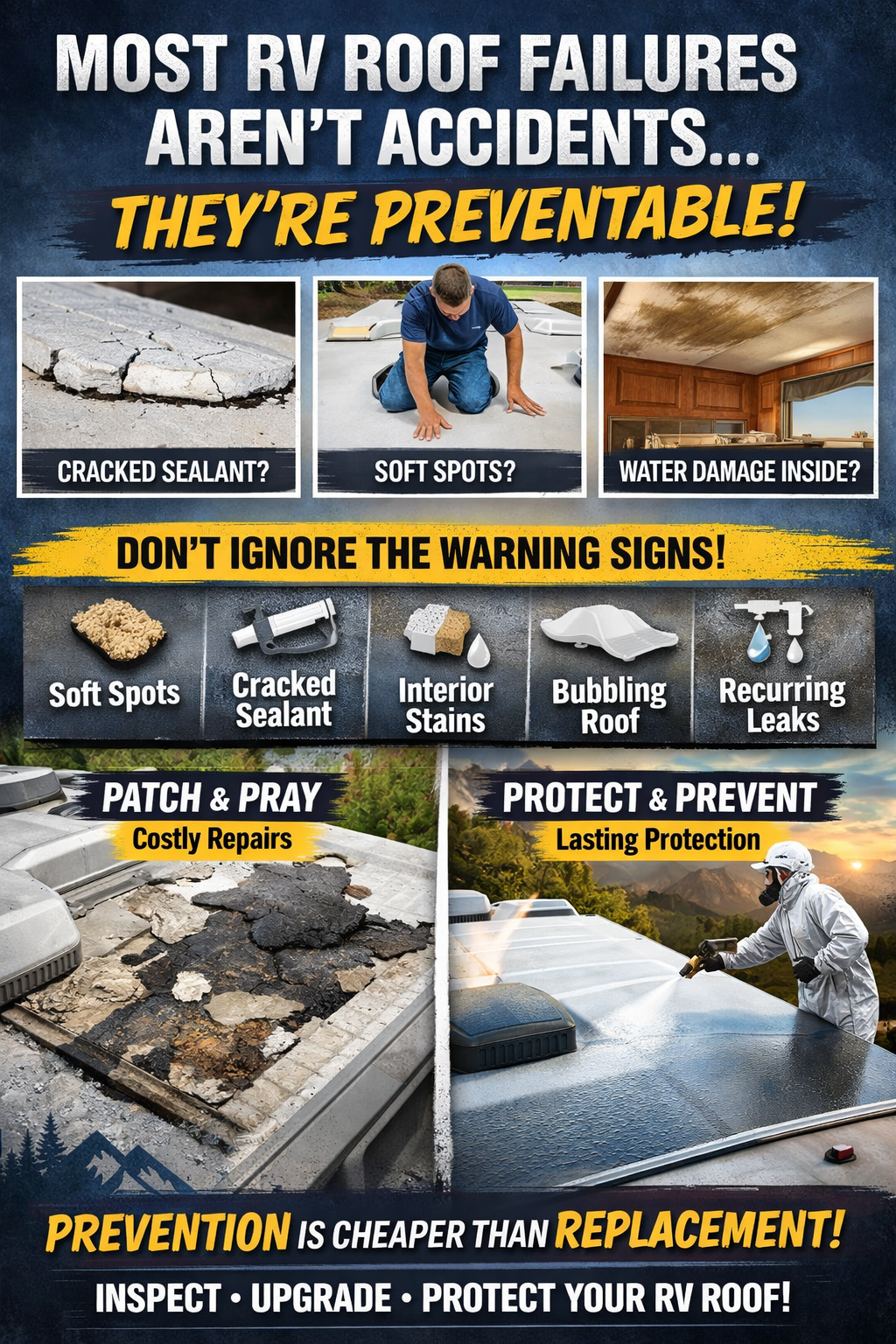
If you own an RV, your roof is either your biggest asset… or your biggest liability.
And here’s the truth most RV owners don’t hear often enough:
Most RV roof failures don’t happen suddenly. They happen slowly — and they’re preventable.
At The RV Ad Guy, we spend a lot of time talking with RV owners, dealers, and service pros. The same story keeps repeating itself: small issues turn into major repairs because no one addressed the warning signs early.
Let’s break it down.
The Real Enemy: Time + Exposure
Your RV roof battles:
UV radiation
Thermal expansion and contraction
Heavy rain and pooling water
Tree debris
Sealant breakdown
Road vibration
Over time, even the best factory-installed roofs start to degrade.
The problem? Most owners can’t see the damage until it’s already serious.
The 5 Warning Signs of Roof Failure
If you notice any of these, your roof needs attention:
1. Soft Spots
If your roof feels spongy underfoot, moisture may already be inside the decking.
2. Cracked or Peeling Sealant
Sealant around vents, skylights, AC units, and seams should be flexible — not brittle.
3. Discoloration or Staining Inside
Water stains on ceilings or walls mean the leak didn’t just start.
4. Bubbling or Lifting Membrane
This often signals trapped moisture or adhesive failure.
5. Recurring Leak Repairs
If you’ve “fixed” the same leak more than once, it’s time for a permanent solution.
The Patch-and-Pray Cycle
Here’s what happens to many RV owners:
Small crack appears
Apply sealant
Leak returns
Apply more sealant
Water damage spreads
Major repair bill arrives
Sealants are maintenance tools — not permanent protection systems.
Eventually, you need more than a tube of caulk.
Prevention Is Always Cheaper Than Replacement
A full roof replacement can cost thousands.
Water damage to walls, insulation, electrical systems, and cabinetry? Even more.
Preventative solutions — including protective roof coatings or reinforced spray-on systems — can:
Eliminate seams
Stop future cracking
Add structural strength
Reflect UV and reduce heat
Extend roof life significantly
The key is acting before the damage becomes structural.
What Smart RV Owners Do Differently
Experienced RV owners follow three simple rules:
✔ Inspect Twice a Year
Spring and fall inspections prevent surprises.
✔ Don’t Ignore Small Issues
Tiny cracks become big problems.
✔ Upgrade Before It Fails
Waiting until the roof collapses is the most expensive strategy.
The Bottom Line
Your RV roof isn’t just a cover — it protects your investment, your travel plans, and your comfort.
Ignoring it doesn’t save money.
It delays a bigger bill.
If you’re not sure about your roof’s condition, get it evaluated. Prevention is predictable. Emergency repairs are not.
And in the RV world, predictable is powerful. Yes yes.
